The GENIUS Act: What US Businesses Need to Know About Stablecoins in 2026
By Furlpay Team · July 6, 2026 · 7 min read

For years the biggest blocker to stablecoin payments in the US was not technology — it was legal uncertainty. That changed on 18 July 2025, when the GENIUS Act was signed into law. It is the first federal framework for payment stablecoins, and for a business deciding whether to accept USDC, it is the green light that was missing.
What the GENIUS Act actually does
The GENIUS Act (Guiding and Establishing National Innovation for U.S. Stablecoins) creates a federal regime for "payment stablecoins" — dollar-pegged tokens like USDC used for payments. It defines who is allowed to issue them and the rules they must follow.
- Only permitted issuers may issue a payment stablecoin for US persons — a subsidiary of an insured depository institution, or a federally or state-qualified issuer.
- 100% reserve backing in liquid assets such as US dollars and short-dated Treasuries, with monthly public disclosure of reserves.
- Issuers are subject to the Bank Secrecy Act — real AML, sanctions screening and customer identification programs.
- Compliant payment stablecoins are carved out of the federal "security" and "commodity" definitions, removing a major source of ambiguity.
The key point: it regulates issuers, not merchants
This is the part most summaries get wrong. The GENIUS Act's obligations fall on the issuer of the stablecoin — for USDC, that is Circle — not on the merchant who accepts it. A hotel or shop accepting USDC is not becoming a regulated stablecoin issuer. What the law gives that business is confidence that the dollar it is being paid in sits inside a federal framework with reserve and disclosure requirements behind it.
The GENIUS Act does not make accepting USDC complicated. It makes the USDC you accept trustworthy — federally regulated, fully reserved, and transparently disclosed.
What it means for your business
| Before | After the GENIUS Act |
|---|---|
| "Is this even legal?" | Federal framework for payment stablecoins |
| Unclear reserve backing | 100% reserves + monthly disclosure required |
| Security/commodity ambiguity | Carved out for compliant payment stablecoins |
| Patchwork by state | A federal baseline |
In practice, the legal clarity is what unlocks enterprise adoption. It is a large part of why so many US merchants now accept crypto, and why accepting USDC is a defensible decision for a CFO rather than a risky one.
How Furlpay fits
Furlpay is a payments platform, not a stablecoin issuer — we help businesses accept USDC (issued by Circle under the GENIUS Act framework) on Arbitrum for a flat 0.5%. We are honest about our own status and do not claim to be a GENIUS Act issuer. See how acceptance works on the payments page and the honest cost breakdown in Crypto vs Card Fees.
This article is information, not legal advice. The GENIUS Act was signed 18 July 2025. Status as of 12 October 2026: the agencies did not finish their implementing rules by the Act's 18 July 2026 deadline; the OCC and Treasury have published proposed rules, the comment period on Treasury's proposal closes 19 October 2026, and the OCC has said it intends to finalise its rule by November 2026. The Act takes effect on 18 January 2027 or 120 days after final regulations, whichever comes first. Consult qualified counsel about your specific situation.

Founder & CEO, FurlPay · Software Engineer at Skyhigh Security · NeurIPS 2026 author · Google DeepMind contributor · ex-Quantiphi
Ashutosh is a Software Engineer at Skyhigh Security (previously Quantiphi), working across ML systems and cloud infrastructure. He is a contributor to Google DeepMind and a NeurIPS 2026 author. He is building Furlpay: stablecoin payments, travel booking, and investing in one client — settled on Arbitrum. Pay in USDC, book 2.2M+ stays and flights, and let AI agents pay per-request via x402. Phishing-resistant. Compliance-aware. Zero gas.
Don't miss the next one
Stay ahead of the curve
Get product updates, engineering deep-dives, and security bulletins. No spam — just the signal.
More in Legal & Compliance
The CLARITY Act Is Not Dead. It Is Running Out of Calendar.
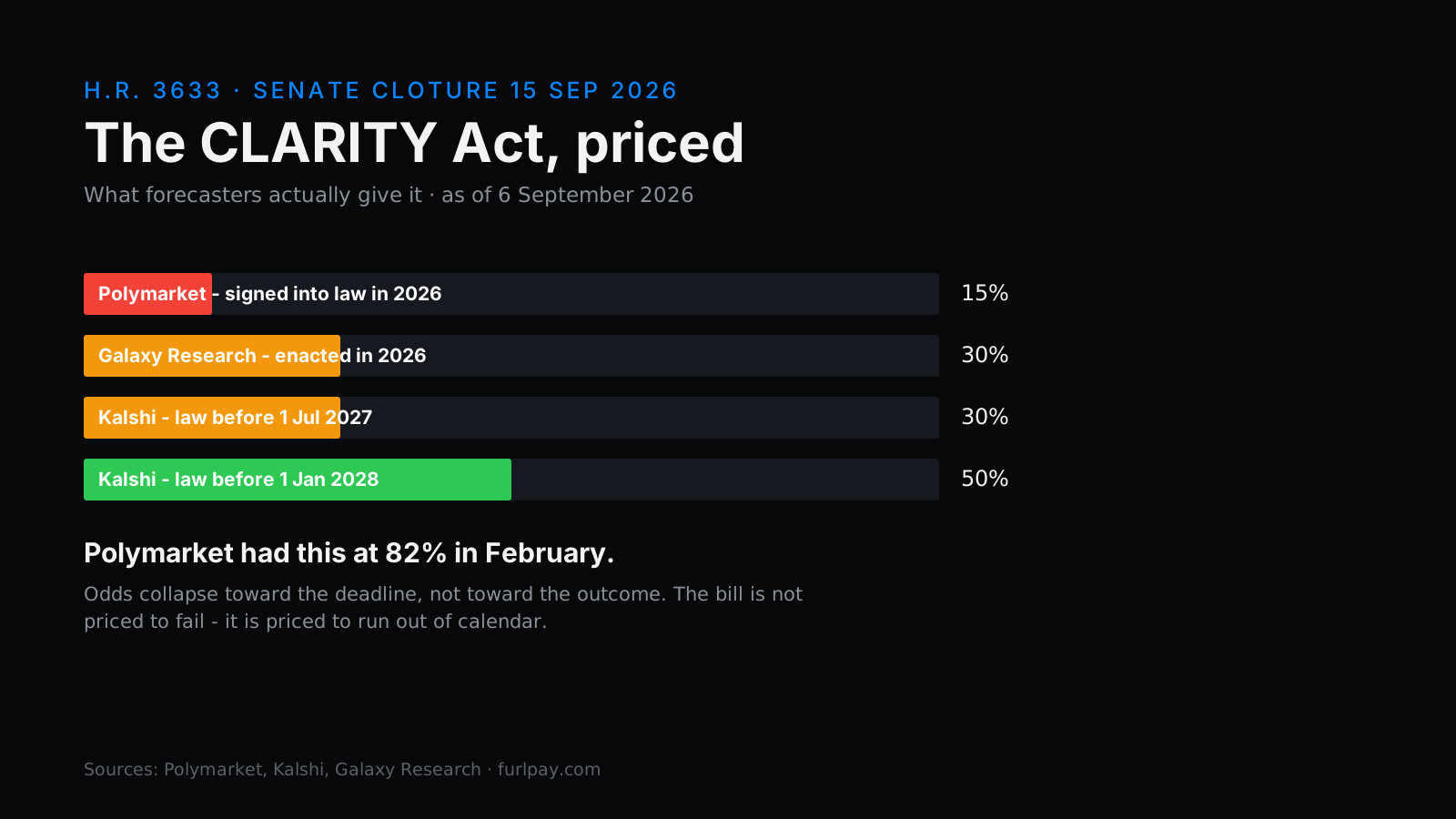
Updated 12 October: the 15 September cloture vote failed 49–50. Before it, prediction markets gave the CLARITY Act a 15% chance of becoming law in 2026 — and 50% by January 2028. The bill is late, not dead. Meanwhile JPMorgan settles more than $7bn a day in tokenized deposits without waiting for it. What the 15 September Senate vote decided, what atomic settlement does and does not fix, and why the strongest objections come from the people who understand market structure best.
September 7, 2026 · 23 min read
Stablecoin Transaction Volume in 2026: Circle, Tether and the Race to Build the Payment Rail
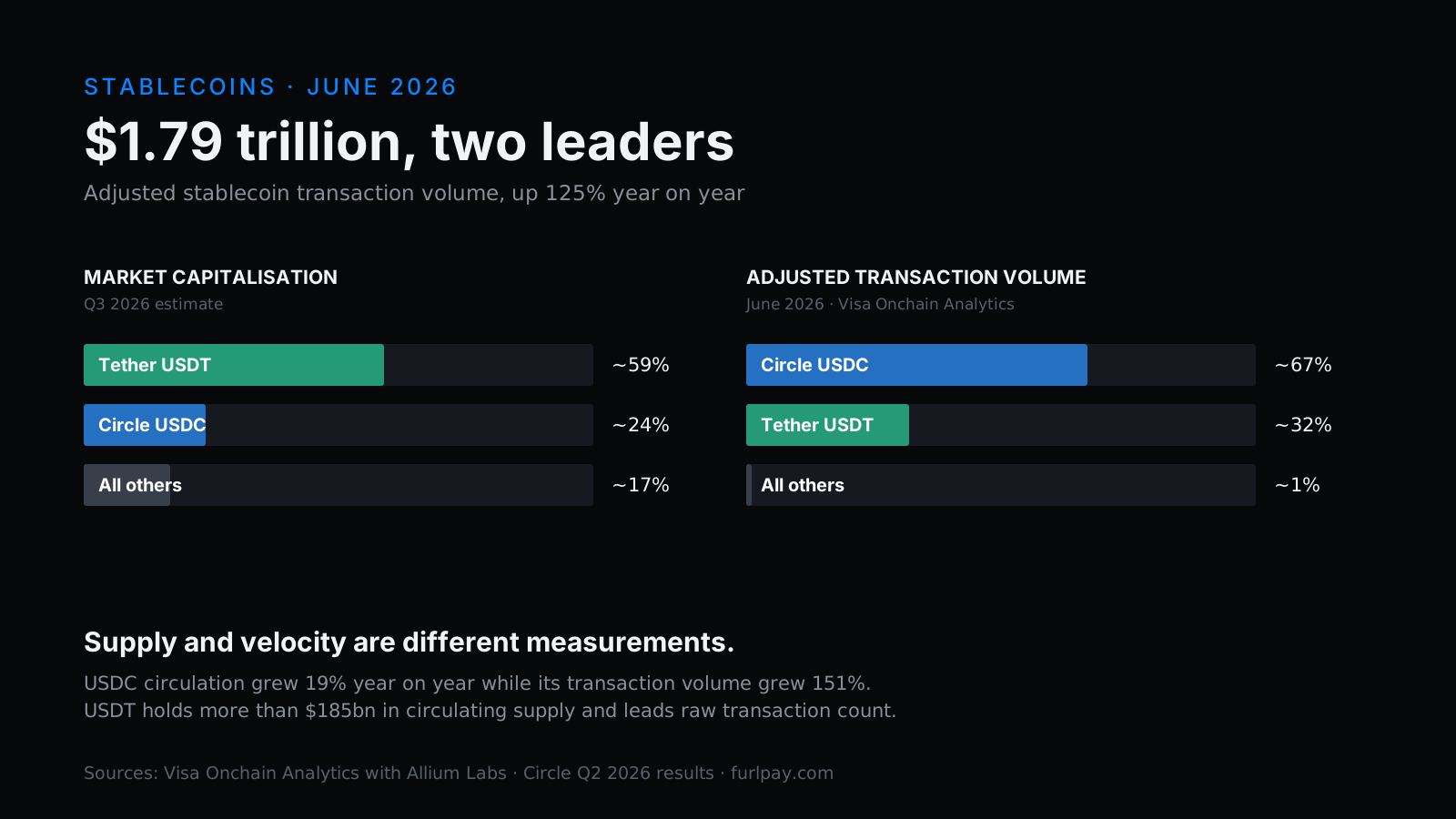
Stablecoins settled $1.79 trillion in adjusted transaction volume in June 2026, up 125% year on year. USDC accounted for approximately 67% of that volume; USDT remains the largest stablecoin by market capitalisation at more than $185 billion. An analysis of what each metric measures, where Circle and Tether actually stand, and what Visa, Mastercard, Stripe, PayPal and Coinbase are building around them.
September 7, 2026 · 15 min read

Stablecoins Quietly Overtook Crypto for Cross-Border Payments — Here Is the Data
In 2025 stablecoins settled about $33 trillion on-chain, more than Visa and Mastercard combined, while Bitcoin and Ethereum's share of cross-border flows kept shrinking. The GENIUS Act, Stripe's $1.1B Bridge deal and Mastercard's $1.8B BVNK deal all landed in the same window. Here is what actually happened, with the figures checked against primary sources — and where a middleware layer like FurlPay fits.
July 18, 2026 · 12 min read